
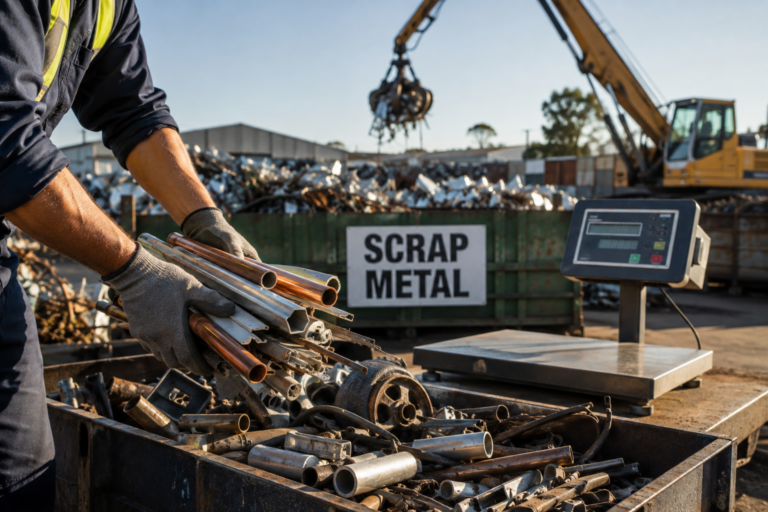
A builder’s labourer in Henderson came in last month with two loads in two weeks. First load: mixed, unsorted, dirty , a skip bin’s worth of off-cuts, old pipe, cable, steel brackets, and window frames all thrown together. He got a fair price for a mixed load. Second load: same types of material from the next job, but this time sorted by metal type, copper stripped, aluminium separated from steel. He walked away with significantly more for roughly the same weight.
The difference wasn’t luck or timing. It was preparation. And preparation in scrap metal is one of those rare areas where a small investment of time at your end produces a disproportionately large return at the yard.
This is the practical guide to getting that return.
Why preparation changes your payout so dramatically
Scrap yards don’t magic extra money from nowhere when you bring in a sorted load. What they’re doing is pricing your metal accurately at its actual grade, rather than defaulting to the lowest common denominator.
When metals are mixed, the yard has to either sort them (labour cost, which comes off your price) or price the whole load at the lowest-value metal in the mix. That’s why a load that’s 80% copper and 20% steel mixed together often gets priced near the steel rate, not the copper rate. The yard isn’t trying to rip you off , they simply can’t process the copper at copper rate if it takes significant labour to separate it.
The rule is simple: your preparation time converts directly into payout. An hour of sorting is often worth $50-$200 extra on a moderate-sized load.
Step 1: Sort by metal type first
Before anything else, separate what you have into piles. You don’t need to be a metallurgist , the magnet test handles most of it.
The magnet test
Grab a magnet , even a fridge magnet works. If the metal is attracted to the magnet, it’s ferrous (iron-based): steel, cast iron, and most rebar. If the magnet doesn’t stick, it’s non-ferrous , copper, aluminium, brass, stainless steel.
Non-ferrous metals are almost always worth more per kilogram than ferrous metals. Keep them rigorously separate.
Common categories to keep apart
- Copper: wiring, pipe, sheeting, fittings, radiators
- Aluminium: window frames, fly screens, cable tray, conduit, engine blocks (separately from extrusions)
- Brass: taps, valves, fittings, bushings
- Steel and iron: structural steel, rebar, galvanised sheet, old machinery
- Stainless steel: sinks, commercial equipment, food-grade fixtures , keep well away from regular steel
- Mixed: whitegoods, HVAC units, anything you genuinely can’t identify , these go in a separate pile last
Stainless steel in particular gets lost money for people who mix it with regular steel. Stainless pays $0.80-$1.20/kg; regular steel pays $0.15-$0.30/kg. Mixing them collapses the stainless rate.
Step 2: Strip your copper wire
This is the single highest-return preparation task for most Perth sellers. Insulated copper wire pays $4-$7/kg. Stripped bare-bright copper wire pays $11-$13/kg. The difference is the plastic insulation you’re removing.
You don’t need special equipment for smaller quantities , a utility knife and a flat surface works fine for thick cable. For high volumes or regular work, a wire stripper tool from a hardware store (around $30-$80) pays for itself on the first few kilograms.
Is it always worth stripping? Here’s the honest answer: it depends on the gauge. Very thin wire (data cable, telephone cable) is time-consuming to strip and the copper content is low , often not worth the effort. Thick single-core house wiring and heavy three-phase cable are absolutely worth stripping. The copper-to-plastic ratio is high and the weight per metre is significant.
Quick rule of thumb: if the wire is thicker than a pencil, strip it. If it’s thinner, only strip if you have volume and the right tool.
Step 3: Remove non-metal attachments
This applies across all metal types. Brass fittings on copper pipe reduce the grade and sometimes the price of the copper. Plastic end caps on aluminium extrusions add weight without adding value (and the yard will remove them anyway). Steel screws and bolts on aluminium frames drag the price down.
Go around your pile before loading up and remove:
- Brass and bronze fittings from copper pipe (keep the brass , it’s worth $3.50-$5.00/kg)
- Plastic caps, rubber seals, and gaskets from any metal
- Steel bolts and fixings from aluminium or stainless steel pieces
- Insulation and lagging from copper pipe (especially older fibreglass or foam insulation)
- Lead flashing or solder from copper sheet where possible
Ready to bring your prepared load in?
Our Naval Base yard accepts all prepared and mixed loads. Drive in, get weighed on certified scales, and leave with same-day payment. Serving Rockingham, Kwinana, Henderson and surrounds.
Call 0436 278 549 , we’re open six days →
Step 4: Clean off contamination
Oil, paint, coolant, and heavy dirt can drop the grade of your metal or cause it to be refused at some yards. This isn’t about making your scrap look pretty , it’s about avoiding being stuck with material you’ve already loaded and transported.
At most Perth yards including ours, lightly dirty metal is accepted at a standard grade. Heavily contaminated material , soaked in coolant, covered in chemical residue, or potentially hazardous , needs to be disclosed when you call ahead.
For most residential and light commercial scrap, a rough wipe-down with a rag is more than enough. The objective is “not actively dripping” rather than showroom condition.
Step 5: Do a quick ID check before you leave
Under WA regulations, licensed scrap yards require photo ID to record the transaction. You’ll need it. A driver’s licence is the most commonly accepted form , take it with you every time.
If you’re selling on behalf of a business (a construction company, a plumbing firm), bring a letter or document showing the company name , this helps with the paperwork and can streamline the process for regular sellers.
What NOT to bring , the stuff that causes problems
A few categories that either won’t be accepted or require special handling:
- Gas cylinders , must have the valve removed or holes drilled top and bottom before acceptance. Sealed cylinders are a safety hazard.
- Items with asbestos , not accepted at general scrap yards. Requires licensed asbestos removal and disposal.
- Refrigerants , air conditioners and fridges with intact refrigerant lines need to be degassed first. Many yards accept them after degassing; some do it themselves. Ask when you call.
- Radioactive material , obviously not. But worth mentioning for industrial sites near the Kwinana precinct where unusual materials occasionally appear.
- Materials you don’t own , WA has strict anti-theft regulations for scrap metal. All transactions require ID and are recorded. Don’t bring scrap you can’t demonstrate ownership of.
Frequently asked questions about preparing scrap metal for Perth yards
Is it worth sorting my scrap before going to a Perth yard?
Yes, significantly. Sorted metal gets priced at its actual grade rather than the lowest common denominator. A typical load that’s been sorted, stripped (if copper), and cleaned can earn 20-50% more than the same material unsorted. The preparation time is usually worth it for any load over 10-15kg of non-ferrous metal.
How do I strip copper wire quickly?
For small quantities, a sharp utility knife along a flat surface works fine. For regular or high-volume work, a manual wire stripper from a hardware store ($30-$80) is faster and more consistent. Only strip wire that’s thicker than about 5mm diameter , very thin wire isn’t worth the effort relative to the copper content.
Do I need to weigh my scrap before coming to the yard?
No. The yard’s certified scales do the weighing , it’s actually better to let them weigh it because the measurement is accurate and there’s no dispute. What’s useful to know beforehand is an approximate weight and what metals you have so you can get an indicative quote over the phone.
Can I bring in a mixed load if I haven’t had time to sort it?
Yes. Mixed loads are accepted and you’ll still receive a payment. You just won’t get as much per kilogram as a sorted load because the yard prices the whole thing conservatively to account for the processing cost. Sorting is worth it when you have the time , but it’s not a barrier to selling.
What do I do with car batteries and fluorescent tubes?
Car batteries are accepted and paid for as scrap , they contain valuable lead. Fluorescent tubes should not come to a scrap metal yard; they contain mercury and require e-waste or hazardous waste disposal. Contact your local council for fluorescent tube recycling options in Rockingham or Kwinana.
The ten-minute rule
Here’s how we’d frame it: spend ten minutes before you load up. Run through the magnet check, pull out any obvious non-metal attachments, separate the copper from the aluminium from the steel, and strip whatever copper wire is worth stripping. That ten minutes on a typical tradie or home renovation load will add more to your payout than any other single action.
And if you genuinely don’t have the time? Bring it in anyway. A mixed load is still better than a skip bin. But do the ten-minute check when you can , you’ll notice the difference at the weigh-bridge.
Talk to us before you load up
Not sure what you’ve got or how to sort it? WhatsApp us a photo and we’ll give you honest advice before you make the trip. No obligation , just practical help from a yard that wants you to get the best result.
WhatsApp 0436 278 549 with a photo of your scrap →